

Light‑Driven Room‑Temperature Polarization Relay to the Cancer‑Metabolism MRI Agent “Pyruvic Acid” — Toward Next‑Generation High‑Sensitivity MRI via Rapid Molecular Assembly —
Oct 14, 2026
A research team consisting of assistant professor Takuya Kurihara of the Faculty of Chemistry, Institute of Science and Engineering, Kanazawa University; associate professor Munehiro Inukai, professor Koichi Nakamura of the Physical Sciences, Department of Natural Sciences, Division of Science and Engineering, Industrial and Social Sciences, Graduate School of Technology, Tokushima University, and third‑year doctoral course graduate student Haruki Sato (at the time of research) of the Graduate School of Sciences and Technology for Innovation, Tokushima University; the Center for Quantum Information and Quantum Biology (QIQB) and the Premium Research Institute for Human Metaverse Medicine (PRIMe) of Osaka University; and WPI-iCeMS (World Premier International Research Center Initiative – Institute for Integrated Cell-Material Sciences) of Kyoto University focused on triplet DNP(*1), which enables alignment of spin orientation at room temperature without using cryogenic agents. By utilizing co‑crystallization(*2), the team succeeded in achieving “polarization relay(*3)”, transferring spin polarization generated at room temperature to pyruvic acid.
The sensitivity of NMR (nuclear magnetic resonance)(*4) and MRI (magnetic resonance imaging)(*5) strongly depends on the degree of alignment of nuclear spins, that is, the polarization level. Although dynamic nuclear polarization (DNP)(*6) has attracted attention as a technique to enhance this polarization level, conventional methods often require extremely low‑temperature environments or expensive equipment, posing challenges for widespread use. In this study, room‑temperature, light‑driven triplet DNP was used to generate spin polarization in the mediator molecule picolinamide. Furthermore, by rapidly mixing this picolinamide with pyruvic acid and utilizing co‑crystallization, in which molecules assemble into ordered crystals within seconds, the team succeeded in relaying the spin polarization to pyruvic acid. Assistant professor Kurihara contributed to this achievement by conducting part of the solid‑state NMR measurements of the co‑crystals.
This achievement demonstrates a new method for delivering polarization to molecules that are otherwise difficult to polarize directly using triplet DNP. Future applications are expected in next‑generation high‑sensitivity NMR analysis without cryogenic agents and in the development of MRI diagnostic agent molecules(*7).
The results of this research were published online as an Advance Article in the Royal Society of Chemistry journal “Chemical Science“ on July 1, 2026.
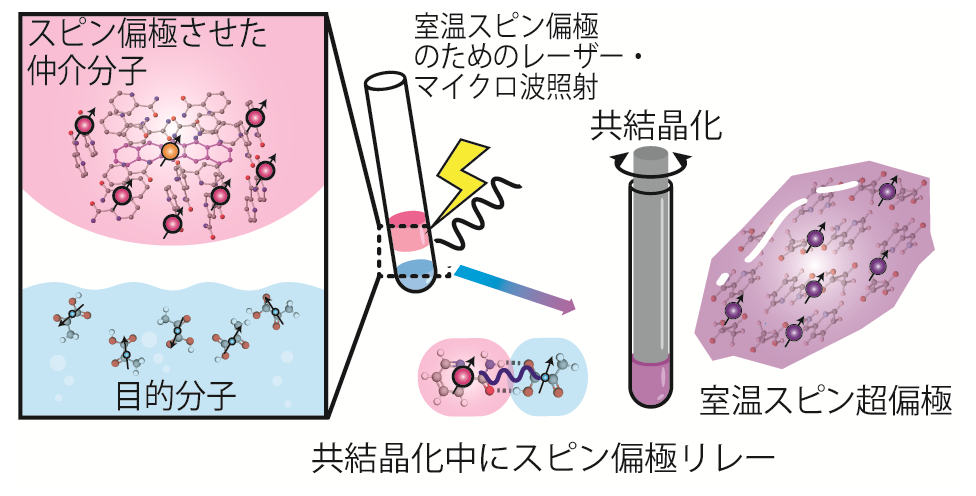
Figure 1: Conceptual Diagram of Polarization Relay via Co‑Crystallization
Room‑temperature triplet DNP generates spin polarization in the mediator molecule picolinamide. Rapid co‑crystallization with the target molecule pyruvic acid enables the relay of spin polarization to pyruvic acid.
【Glossary】
*1 Triplet‑DNP (Triplet Dynamic Nuclear Polarization)
A type of DNP that uses spin polarization generated in a transient “triplet state” formed when molecules are photoexcited. Unlike conventional DNP, it has the potential to polarize nuclear spins at room temperature without cryogenic cooling, making it a promising technique for high‑sensitivity NMR/MRI without cryogenic agents.
*2 Co‑crystallization
A process in which multiple types of molecules assemble into an ordered crystal through hydrogen bonding or other interactions. In this study, the rapid formation of co‑crystals between pyruvic acid and picolinamide was utilized to relay spin polarization to the target molecule.
*3 Polarization Relay
A method for transferring spin polarization generated in one molecule to another target molecule. In this study, spin polarization generated in picolinamide via room‑temperature triplet DNP was relayed to pyruvic acid through co‑crystallization.
*4 NMR (Nuclear Magnetic Resonance)
An analytical technique that uses nuclear spin properties to investigate molecular structure and dynamics. When electromagnetic waves are applied to a sample in a magnetic field, NMR signals are obtained from atomic nuclei in molecules. Because NMR signals are generally weak, sensitivity‑enhancement techniques are important.
*5 MRI (Magnetic Resonance Imaging)
A technique that visualizes internal body structures by detecting NMR signals from water molecules and other components. MRI distinguishes the origin of signals by slightly varying magnetic field strength depending on location. It is widely used for diagnosing injuries and diseases, as well as for brain research.
*6 Dynamic Nuclear Polarization (DNP)
A technique that enhances NMR/MRI signals by transferring electron spin polarization—more easily aligned than nuclear spins—to nuclear spins. Conventional DNP often requires extremely low temperatures or expensive equipment to achieve high polarization levels, posing challenges for widespread use.
*7 MRI Diagnostic Agent Molecules
Molecules used to investigate biochemical environments or reactions inside the body. Because NMR or MRI signals change depending on metabolic or enzymatic reactions, these molecules provide clues for examining molecular‑level changes occurring within living organisms. Pyruvic acid used in this study is one of the representative molecules for assessing the metabolic state of cancer cells.
Click here to see the press release.【Japanese only】
Journal : Chemical Science
DOI 番号: 10.1039/D6SC03071H
Researcher Information : Takuya Kurihara