

World’s First Discovery: Partial Structure and Function of the Mysterious Metabolon Uncovered — A New Principle for Guiding Enzymes, the “GATE Mechanism” —
Oct 19, 2026
Associate Professor Satoshi Yamashita of the Faculty of Chemistry, Institute of Science and Engineering, Kanazawa University, together with Associate Professor Kazutomo Kawaguchi of the Faculty of Mathematics and Physics, Professor Noriyuki Kodera of the Nano Life Science Institute (WPI‑NanoLSI), Specially Appointed Assistant Professor Riki Imaizumi and Associate Professor Toshiyuki Waki of the Graduate School of Engineering, Tohoku University, as well as collaborators from Tokushima University, RIKEN, and Hokkaido University, have elucidated for the first time in the world the partial structure and function of the unstable enzyme complex known as the metabolon(*2), which plays a key role in plant metabolism(*1), at atomic resolution.
In cellular metabolism, multiple enzymes loosely assemble to form structures known as metabolons. However, because metabolons are extremely unstable, their structural details and mechanisms of metabolic regulation have remained unknown.
In this study, the research team analyzed the complex formed between chalcone synthase (CHS), an enzyme involved in flavonoid biosynthesis(*3), and CHIL, a protein that assists CHS. The analysis revealed that CHIL alters the structure of the active site(*4) of CHS, enabling precise control of otherwise unstable reactions. CHIL functions as a “dynamic guide”, working closely alongside the main enzyme to ensure accurate reaction progression. Furthermore, the team discovered that transient protein–protein interactions adjust the active site of the enzyme, guiding it toward the correct entry point of the metabolic pathway. This newly identified principle was named the GATE Mechanism (Guided Active‑site Tuning via transient Enzyme association).
In this collaborative work, Associate Professor Yamashita and colleagues determined the CHS–CHIL complex structure using X‑ray crystallography, Associate Professor Kawaguchi conducted molecular dynamics simulations, and Professor Kodera and colleagues at WPI‑NanoLSI performed interaction analyses of CHS and CHIL.
This discovery may represent a universal principle of metabolic regulation across living organisms and is expected to contribute to applications in synthetic biology, metabolic engineering, and other broad areas of biotechnology.
The research findings were published in “Nature Catalysis“ on June 15, 2026.
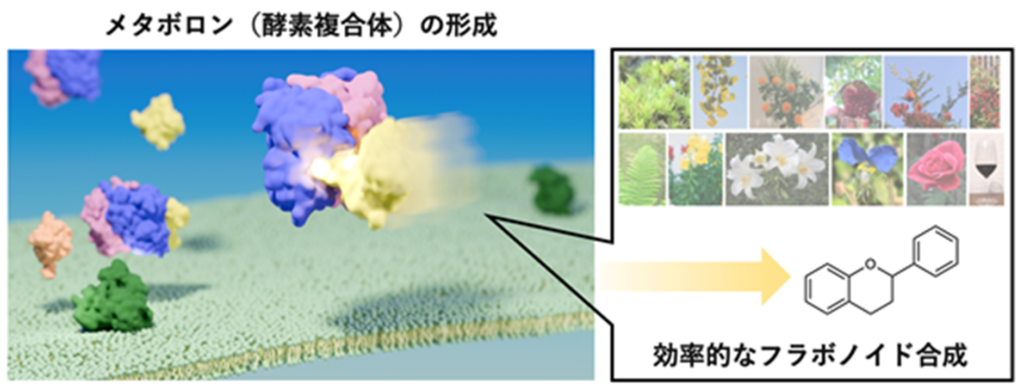
Figure 1: Overview of Efficient Flavonoid Biosynthesis via Metabolon (Enzyme Complex) Formation in Cells
【Glossary】
*1 Metabolism
Life processes are sustained by numerous chemical reactions occurring within organisms. These reactions form continuous pathways in which the product of one reaction becomes the substrate for the next. Such chains of reactions are called metabolic pathways, each driven by specific proteins known as enzymes.
*2 Metabolon
A hypothesized enzyme complex formed by multiple enzymes within a metabolic pathway that loosely associate inside the cell. Proposed over 40 years ago, metabolons are thought to facilitate efficient transfer of unstable intermediates and prevent diffusion of harmful compounds. Their weak and reversible interactions make detection difficult, and their actual structure has remained elusive.
*3 Flavonoids
A group of compounds produced by land plants with a basic C6–C3–C6 structure. Many red, blue, and purple flower colors arise from anthocyanins, a type of flavonoid, while yellow coloration involves aurones. Flavonoids play essential roles in plant reproduction, responses to pests and environmental changes, and symbiosis with microorganisms. In humans, they are known for beneficial health functions.
*4 Active Site
The region on or within an enzyme where specific substrates bind and chemical reactions occur.
Click here to see the press release.【Japanese only】
ジャーナル名:Nature Catalysis
DOI:10.1038/s41929-026-01551-6
Researcher Information : Satoshi Yamashita
Kazutomo Kawaguchi
Noriyuki Kodera